Loading
Drastically Improve Your Chess
Upgrade to a FileSonic Premium account and download at incredible speed!

This is default featured post 1 title

Go to Blogger edit html and find these sentences.Now replace these sentences with your own descriptions.This theme is Bloggerized by Lasantha Bandara - Premiumbloggertemplates.com.

This is default featured post 2 title

Go to Blogger edit html and find these sentences.Now replace these sentences with your own descriptions.This theme is Bloggerized by Lasantha Bandara - Premiumbloggertemplates.com.

This is default featured post 3 title

Go to Blogger edit html and find these sentences.Now replace these sentences with your own descriptions.This theme is Bloggerized by Lasantha Bandara - Premiumbloggertemplates.com.

This is default featured post 4 title

Go to Blogger edit html and find these sentences.Now replace these sentences with your own descriptions.This theme is Bloggerized by Lasantha Bandara - Premiumbloggertemplates.com.

This is default featured post 5 title

Go to Blogger edit html and find these sentences.Now replace these sentences with your own descriptions.This theme is Bloggerized by Lasantha Bandara - Premiumbloggertemplates.com.

Most In-depth Study ( Must Have )

Sunday, March 28, 2010

Rook Endgames - Lesson 8 - Cutting off the King

In this lesson you will find an important situation that will recur time in again in numerous endgame. Not wasting any word lets jump into it.

Cutting off the King


It should be said that this sort of race is not untypical in rook endings. Kings do end up on opposite sides of the board. One reason for this is that a king may need to travel a distance to eliminate enemy pawns in order to create a 'passer' of its own.
Another possibility is that a king makes a decision to journey up the board in order to help promote a passed pawn. That is often necessary with an enemy rook behind the pawn, and a typical outcome is that the king forces the enemy rook to sacrifice itself for the pawn. This gain in material, however, leaves the king offside, and then the long trip back starts. The big question is whether the king gets back in time to halt the opponent's pawn without having to give up its own rook for it. Clearly in this example it proved a bridge too far.
However, sometimes opportunities are missed and on move one the useful 'cut off' technique could have been employed in the form of 1 Rg5!!. See below.

 
That it ...Another one next time. Stay Tuned!

Attack The King - A Complete Chess Portal
If you liked the article kindly Digg it, Stumble it, Add to Technorati, bookmark it and please consider Subscribing by Email  and have articles delivered right to your inbox! OR Subscribe to Attack the King Feed in a Fead Reader of your choice OR Subscribe to SMS Alerts & Get Article Headlines & Updates delivered to your Mobile Phone for free.

Rook Endgames - Lesson 7 - Pushing Passed Pawns

Hello & welcome everyone to series of lessons on Rook Endgames. So far we have covered some basic endgame strategies in previous articles. Interested readers who have just joined us can scroll down to the bottom of this post to explore previous articles on this series under the 'Related Posts' section. Well today we are going to learn another basic endgame strategy concerning passed pawns. So sit tight & enjoy!

Pushing Passed Pawns
So far we have seen passed pawns both succeeding and failing to make a nuisance of themselves. In order to compare passed pawns, take a look at the following extreme case.


NOTE: A famous adage runs 'Passed pawns are meant to be pushed'.
Clearly the closer pawns are to promotion, the more dangerous and similarly the more valuable they become. As it would no doubt force your opponent to take note, it does follow that you should get on with pushing passed pawns. However...
WARNING: Each plan should be taken on its own merits. Forgoing a sensible king centralization, for example, in favour of pushing a doomed passed pawn would not be bright.

That's it for now...Stay tuned coz there is much more to come.

Attack The King - A Complete Chess Portal
If you liked the article kindly Digg it, Stumble it, Add to Technorati, bookmark it and please consider Subscribing by Email  and have articles delivered right to your inbox! OR Subscribe to Attack the King Feed in a Fead Reader of your choice OR Subscribe to SMS Alerts & Get Article Headlines & Updates delivered to your Mobile Phone for free.

7th World Champion Vasily Smyslov dies at 89

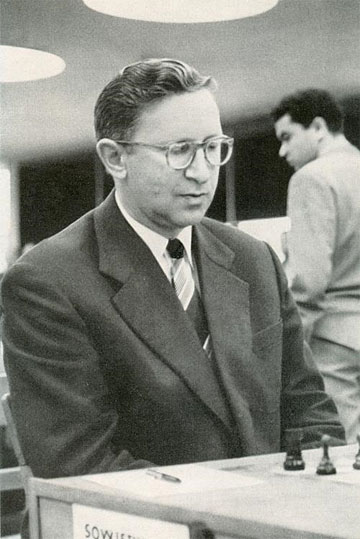
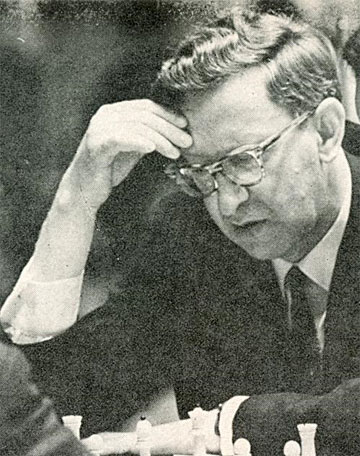
He was "one of the great chess geniuses of the twentieth century" (Boris Spassky). Vasily Vasiliyevich Smyslov was born on March 24, 1921, auditioned as a baritone singer at the Bolshoi Theatre before he took up chess as a full-time career. In 1957 he beat Botvinnik in the world championship match and held the title for a year. Smyslov died in the night to Saturday March 27, 2010. In memoriam.

Vasily Smyslov, 1921 – 2010
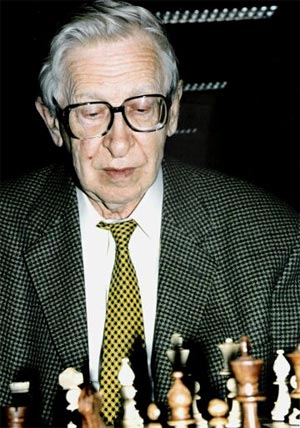

We regret to announce the passing of Vasily Smyslov, who died on 27th March 2010 in Moscow, just three days after his 89th birthday. This information was passed to us by Boris Spassky, who had just returned from Moscow. "Vasily was one of the great chess geniuses of the twentieth century," Spassky said. "For me there were four titans of chess in the Soviet Union after the Second World War: Botvinnik, Smyslov, Keres and Bronstein"
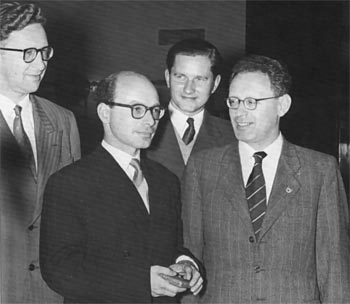
Smyslov, Bronstein, Keres and Botvinnik in 1954
Vasily Vasiliyevich Smyslov was born on March 24, 1921. He learnt chess at the age of six, and after studying books in his father's library, became really serious about the game at the age of 13, when two world champions, Capablanca and Lasker, visited his native city of Moscow. At the age of 16 he won the All-Union boys' championship, and at 17 he shared first in the Moscow City Championship. At 19 he came third in the unrestricted USSR Championship. There followed a string of successes that caught the eye of world champion Alexander Alekhine, and he became internationally known when he beat Samuel Reshevsky twice in the famous USSR vs USA radio match in 1945.
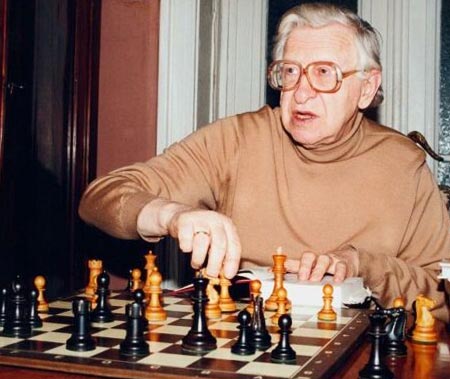
In the world championship tournament staged in 1948 to determine Aljechin's successor Smyslov came second after Botvinnik, who got the title, and ahead of Keres, Reshevsky and Euwe. In the Zurich Candidates Tournament of 1953 Smyslov scored +9 =10 –1, two points more than the nearest rival. He drew the world championship match against Botvinnik in 1954, and Botvinnik retained the title. Smyslov won the next Candidates, 1956 in Amsterdam, again with a clear margin, and in 1957 he beat Botvinnik in the world championship match by +6 =13 –3, but lost it a year later to the same player +5 =11 –7.
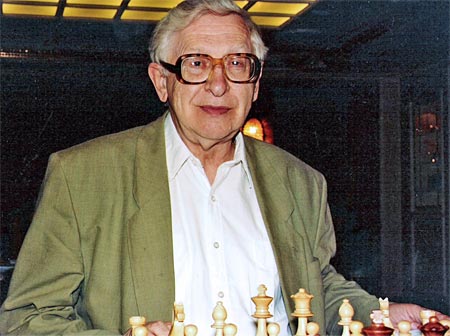
The former world champion, in Monaco 1994
After his one-year reign as world champion Smyslov played in the 1959, 1964 and 1982 Candidates tournaments. But he never again became a challenger. One should note that at his final Candidates event in 1982 was 61, the oldest player ever to participate in such an event. Incidentally he drew his quarter-final match against Robert Hübner 7:7 and won the tiebreak, which was a spin of the roulette wheel in the Casino where they were playing. He went through to the final, the match that determined who would challenge Anatoly Karpov, but lost 8.5:4.5 to Garry Kasparov.
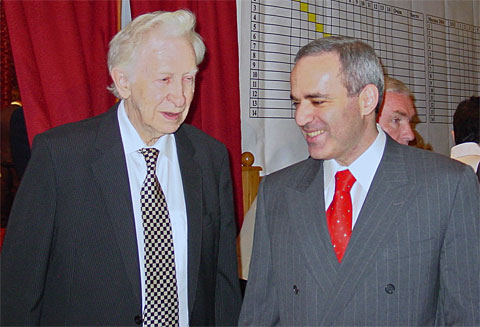
Vasily Smyslov with his former rival Garry Kasparov in 2004
Smyslov was always known for his positional style and his extraordinary endgame abilities. He was also a great combinational player, and in his games we find many spectacular tactical shots. In the opening he made important contributions to the English, Grünfeld, Ruy Lopez and Sicilian.
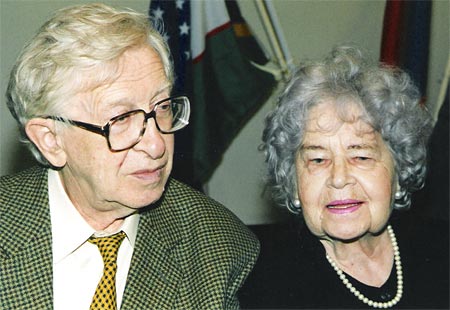
The Smyslovs

Smyslov with his wife at the 2004 Russian Superfinals
In his early years Smyslov studied at the Moscow Institute of Aviation. He also became an accomplished baritone singer. In fact he only decided to take up chess full-time when he failed an audition for the Bolshoi Theatre in 1950. He gave many recitals during his chess career, often accompanied by fellow world championship candidate and pianist Mark Taimanov.
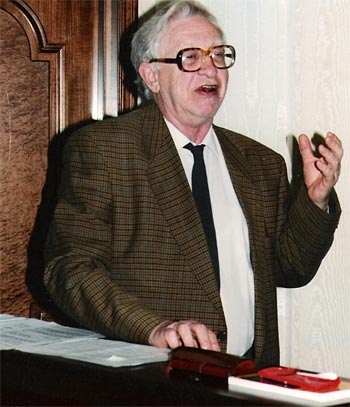
The baritone singer Vasily Smyslov. At the age of 75 he produced his first CD of Russian romances. And in Mai 2001, exactly 50 years after his audition in the Bolschoi Theater, he sang there – in celebration of Anatoli Karpov's 50th birthday.
Smyslov played no competitive games after 2001, his failing eyesight being one of the prime reasons. He ended his chess career at the age of 80 and with an Elo rating of 2500.
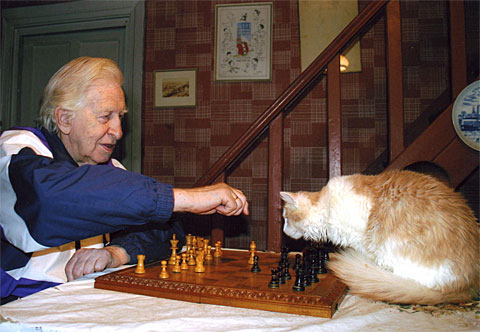
A friendly game with his cat Belka at his dacha
Photos by Dagobert Kohlmeyer

World Champions 1886–to present

 1: Wilhelm Steinitz, 1886–1894, Austria/USA
 2: Emanuel Lasker, 1894–1921, Germany
 3: José Raúl Capablanca, 1921–1927, Cuba
 4: Alexander Alekhine, 1927–1935, Russia/France
 5: Max Euwe, 1935-1937, Netherlands
 4: Alexander Alekhine, 1937–1946, France
 6: Mikhail Botvinnik, 1948–1957, Soviet Union (Russia)
 7: Vasily Smyslov, 1957–1958, Soviet Union (Russia)
 6: Mikhail Botvinnik, 1958–1960, Soviet Union (Russia)
 8 : Mikhail Tal, 1960–1961, Soviet Union (Latvia)
 6: Mikhail Botvinnik, 1961–1963, Soviet Union (Russia)
 9 : Tigran Petrosian, 1963–1969, Soviet Union (Armenia)

10: Boris Spassky, 1969–1972, Soviet Union (Russia)
11: Robert J Fischer, 1972–1975, United States
12: Anatoly Karpov, 1975–1985, Soviet Union (Russia)
13: Garry Kasparov, 1985–2000, Soviet Union (Russia)
14: Vladimir Kramnik, 2000–2008, Russia (PCA/Braingames)
15: Viswanathan Anand, 2007 – present.
FIDE
Anatoly Karpov, 1993–1999, Russia
Alexander Khalifman, 1999–2000, Russia
Viswanathan Anand, 2000–2002, India
Ruslan Ponomariov, 2002–2004, Ukraine
Rustam Kasimdzhanov, 2004–2005, Uzbekistan
Veselin Topalov, 2005–2006, Bulgaria

Stations of a World Chess Champion

A selection from the photographs provided by Edward Winter in Chess Notes
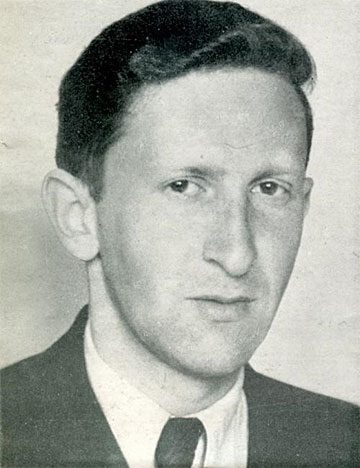

Source: Chess in Russia by P. Romanovsky, London, 1946
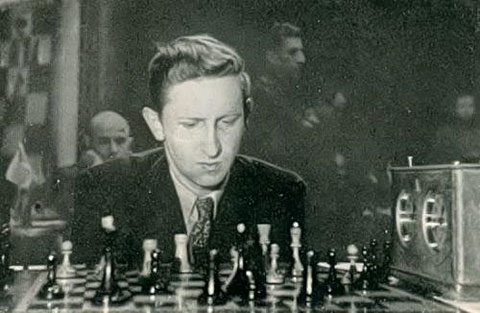
Source: Die Schacholympiade in Helsinki 1952 by H. Müller, Vienna, 1953
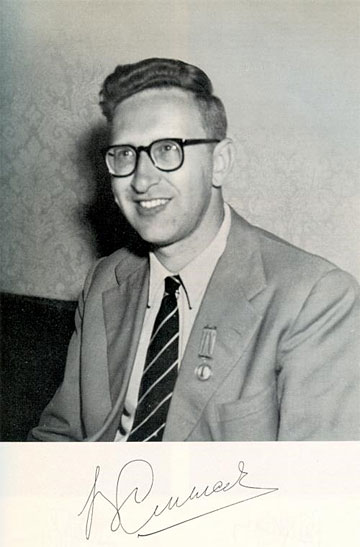
Source: Schach-Elite im Kampf, Zurich, 1954
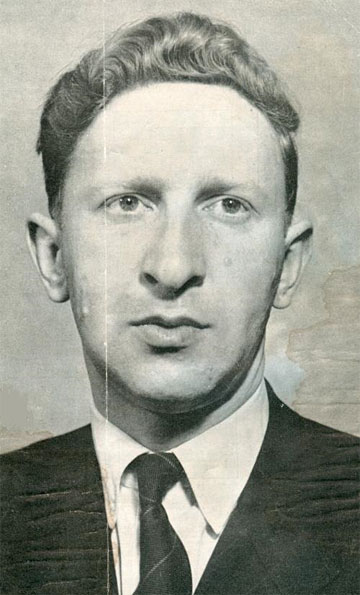

Source: Chess Review, front cover, April 1958
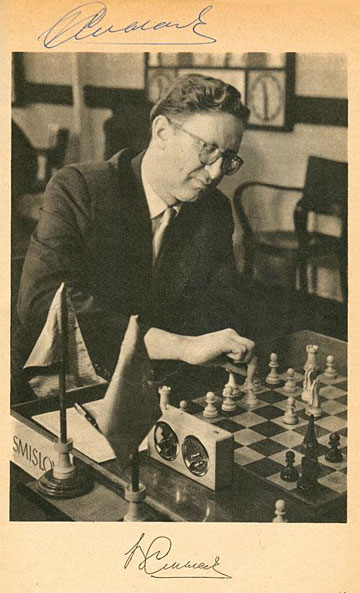

Source: Kandidatenturnier für Schachweltmeisterschaft by S. Gligoric and V. Ragozin, Belgrade, 1960

Source: XIV. Schach-Olympiade Leipzig, 1960

Source: Chess Review, November 1967


Source: Programme, Russia v Rest of the World tournament, 2002
Article Source: Chessbase


Attack The King - A Complete Chess Portal
If you liked the article kindly Digg it, Stumble it, Add to Technorati, bookmark it and please consider Subscribing by Email  and have articles delivered right to your inbox! OR Subscribe to Attack the King Feed in a Fead Reader of your choice OR Subscribe to SMS Alerts & Get Article Headlines & Updates delivered to your Mobile Phone for free.

Friday, March 26, 2010

Rook Endgames -Lesson 6 - Shouldering off the Enemy King

Shouldering off the Enemy King
This is a very important concept in any endgame and essentially refers to the simple idea of maximizing your own king whilst if possible simultaneously reducing the scope of the enemy king. Take the following very simple case.


I hope that it is clear to you now. These are very basic endgame strategies.Slowly & steadily we will move to advanced lessons. In the next lesson we will concentrate on passed pawns.
That's it for now.See you next time.Stay tuned!

Attack The King - A Complete Chess Portal
If you liked the article kindly Digg it, Stumble it, Add to Technorati, bookmark it and please consider Subscribing by Email  and have articles delivered right to your inbox! OR Subscribe to Attack the King Feed in a Fead Reader of your choice OR Subscribe to SMS Alerts & Get Article Headlines & Updates delivered to your Mobile Phone for free.

Rook Endgames - Checking from the Side - Lesson 5

Checking from the Side
Let's look at another important technique available to the rook.
You should recall that two moves into second example of the previous post 'Rook Endgames - Rook Behind Passed Pawns - Lesson 4' we reached the following position:

TIP: Whilst it is usually best to activate a rook from behind, occasionally consider sideways checks.
Attack The King - A Complete Chess Portal
If you liked the article kindly Digg it, Stumble it, Add to Technorati, bookmark it and please consider Subscribing by Email  and have articles delivered right to your inbox! OR Subscribe to Attack the King Feed in a Fead Reader of your choice OR Subscribe to SMS Alerts & Get Article Headlines & Updates delivered to your Mobile Phone for free.

Rook Endgames - Rook Behind Passed Pawns - Lesson 4

Rooks belong behind Passed Pawns
There, I'm even repeating it now so as to help you commit it to memory!
In the following example there is a very dangerous black pawn that is ready to promote. Having spent a lot of time with juniors I notice that they place a lot of comfort value in blocking passed pawns.

NOTE: The underlying theme is that rooks like to be active and they can do that best from behind passed pawns.

Lets move on to the next example.How to stop that pawn?


Now lets continue with the above example.
NOTE: A draw is better than a loss!

Bearing in mind this rather obvious remark, in fact White has numerous ways in which to avoid defeat.Explore it with the following example.


That's it for now.Stay tuned...there is much more to come!


Attack The King - A Complete Chess Portal
If you liked the article kindly Digg it, Stumble it, Add to Technorati, bookmark it and please consider Subscribing by Email  and have articles delivered right to your inbox! OR Subscribe to Attack the King Feed in a Fead Reader of your choice OR Subscribe to SMS Alerts & Get Article Headlines & Updates delivered to your Mobile Phone for free.

Rook Endgames - Limitations of a King - Lesson 3

Every King Should Know its Limitations.
Just as every man must know his limitations (well according to Clint Eastwood), the same must be true of kings. Actually, I guess it is the man (or woman) operating the king that matters.In all endgames it is advisable to get your king into the thick of the action rather than watching from the sidelines. However... Every King Should Know its Limitations but anyway take a look at the next example.

WARNING: The king is a great piece, but it is also a slow one.

Kings really are awesome pieces. Only the queen can control every square within touching distance of itself (as a king does), and thus when it appears on the scene it has a massive impact. The problem invariably is getting it on the scene.
TIP: Centralize your king.
This tip is universal advice to all endgames based on the premise that the king can access any part of the board in the quickest time when positioned here which is depicted in the following example.

TIP: Rooks belong behind passed pawns.
I offer this tip now but I can assure you that it will be a recurrent theme throughout these lessons.
Hope you enjoyed. See you next time. Stay tuned!
Attack The King - A Complete Chess Portal
If you liked the article kindly Digg it, Stumble it, Add to Technorati, bookmark it and please consider Subscribing by Email  and have articles delivered right to your inbox! OR Subscribe to Attack the King Feed in a Fead Reader of your choice OR Subscribe to SMS Alerts & Get Article Headlines & Updates delivered to your Mobile Phone for free.

Rook Endgames - The Monster King - Lesson 2

The ‘Monster’ King

'King and pawn endings, minor piece endings, rook endings, queen endings; what do they all have in common?' I once recall asking a class of juniors. I was prepared for the sarcastic answer 'They're all endings!' but not by the particularly witty response 'They're all boring!' Regarding the latter, some may think that way, but they are usually the individuals who throw away a lot of their hard opening and middlegame work by not making the most of the pieces that remain in the endgame.
The point I was really hoping to make is that all endgames involve kings. Although we spend the early part of the game tucking away our own king into safety and planning devious ways to attack the enemy monarch, there comes a stage in every game where one decides that checkmate is no longer a reality and it could be time for the king to start pulling its weight like every other piece.

'King and pawn endings, minor piece endings, rook endings, queen endings; what do they all have in common?' I once recall asking a class of juniors. I was prepared for the sarcastic answer 'They're all endings!' but not by the particularly witty response 'They're all boring!' Regarding the latter, some may think that way, but they are usually the individuals who throw away a lot of their hard opening and middlegame work by not making the most of the pieces that remain in the endgame. The point I was really hoping to make is that all endgames involve kings. Although we spend the early part of the game tucking away our own king into safety and planning devious ways to attack the enemy monarch, there comes a stage in every game where one decides that checkmate is no longer a reality and it could be time for the king to start pulling its weight like every other piece. Of course an art in itself is knowing exactly when that time is, but in the  subsequent lessons on rook and pawn endgames I can safely say that it's all the time!
See here how both kings are ready to have a field day with the enemy pawns.

Rook_Endgame/the monster king 1.pgn


NOTE: Generally in endgames it is usually deemed a good idea to try and create a passed pawn as soon as possible. The outcome of this particular position depended on the tempi situation and, specifically, whom it was to move. White started and was always favourite in the race to promote a pawn. Note that in accordance with the previous note, Black would have had a better (but still not good!) practical chance with 3...b4 4 axb4 a4. All that is 'king and pawn' endgame territory, where tempi are absolutely vital. Devoid of a rook or two this position is not of so much interest to the following lessons of this  series but I just wanted to make the point that when a king is on the case there are few pieces that are as effective. 
TIP: The king is a tremendous piece. Use it!

In all endgames it is advisable to get your king into the thick of the action rather than watching from the sidelines. However every king should know its limitations. And what that means will be dealt in the next lesson. I urge followers to leave their views on the limitations of a king. 
Hope you enjoyed. Stay tuned for more...

Attack The King - A Complete Chess Portal
If you liked the article kindly Digg it, Stumble it, Add to Technorati, bookmark it and please consider Subscribing by Email  and have articles delivered right to your inbox! OR Subscribe to Attack the King Feed in a Fead Reader of your choice OR Subscribe to SMS Alerts & Get Article Headlines & Updates delivered to your Mobile Phone for free.

Rook Endgames - Lesson 1 - Introduction

There is no doubt that rook and pawn endings are a useful part of the game for every player to get to grips with. I often criticize juniors for castling in the opening but then not bothering to activate their rooks in the middlegame. Their assumption always seems to be that the minor pieces will do battle early on, and if the game is still going, then the rooks will come out to play later. Of course they should be trying to create ‘pawn breaks’ from the opening onwards in order to activate the ten-points-worth of firepower, but sometimes it’s like talking to a brick wall! Perhaps I’m being a bit harsh, but the fact still remains that at lower levels rooks are generally under-achievers in the middlegame and, with this non-confrontational approach, they are naturally the survivors. Hence rook endings tend to be the most common endgame type to arise.

By the way, that’s just single rook endings (or rook versus pawns). I haven’t said much on double rook endgames, partly because they are so rare and partly because the same principles apply, but twofold! Joking aside, the one assumption I have made for this series of tutorials is that the reader knows how to deliver checkmate with a king and rook against a bare king. With two rooks apiece the main difference is that the partnership is able to deliver checkmate without the aid of its monarch. They provide twice as much firepower and thus frequently enjoy doubling on the seventh rank and open files. Regarding the latter, that’s where more typically one pair is exchanged off, thus returning to the realms of these lessons.

There is a famous saying that ‘all rook endings are drawn’. This generalization is highly dubious, but as you work your way through the chapters you will begin to understand its basis. The fact is that, next to opposite-coloured bishop endings, your best chance for a share of the points when you are a pawn down is in a rook endgame. Indeed, that is reflected in the many examples that I use in which the defender salvages a draw thanks to active play and overall employment of the basic ideas I put forward. It’s probably true that the majority of rook endings do finish as draws but it’s one thing ‘knowing that’ and another ‘knowing how to’!

And at this point I suggest that you ‘get knowing’! Please work your way through the lessons and upon completion you will be armed with the required techniques to handle rook and pawn endgames. Then you can start out in something else!

Good luck!
Attack The King - A Complete Chess Portal
If you liked the article kindly Digg it, Stumble it, Add to Technorati, bookmark it and please consider Subscribing by Email  and have articles delivered right to your inbox! OR Subscribe to Attack the King Feed in a Fead Reader of your choice OR Subscribe to SMS Alerts & Get Article Headlines & Updates delivered to your Mobile Phone for free.

Don't forget to subscribe to the thread for tracking replies