Loading
Drastically Improve Your Chess
Upgrade to a FileSonic Premium account and download at incredible speed!

This is default featured post 1 title

Go to Blogger edit html and find these sentences.Now replace these sentences with your own descriptions.This theme is Bloggerized by Lasantha Bandara - Premiumbloggertemplates.com.

This is default featured post 2 title

Go to Blogger edit html and find these sentences.Now replace these sentences with your own descriptions.This theme is Bloggerized by Lasantha Bandara - Premiumbloggertemplates.com.

This is default featured post 3 title

Go to Blogger edit html and find these sentences.Now replace these sentences with your own descriptions.This theme is Bloggerized by Lasantha Bandara - Premiumbloggertemplates.com.

This is default featured post 4 title

Go to Blogger edit html and find these sentences.Now replace these sentences with your own descriptions.This theme is Bloggerized by Lasantha Bandara - Premiumbloggertemplates.com.

This is default featured post 5 title

Go to Blogger edit html and find these sentences.Now replace these sentences with your own descriptions.This theme is Bloggerized by Lasantha Bandara - Premiumbloggertemplates.com.

Most In-depth Study ( Must Have )

Tuesday, March 30, 2010

Gareyev Captures JNBS UWI Masters in Jamaica

This is not just any event – it took place on the campus grounds of the University of the West Indies at Mona, Jamaica, nestled in a lush valley, one of the most scenic areas in Greater Kingston. On the free day participants could typically scramble up waterfalls or swim with dolphins. The chess action was dominated by Uzbek GM Timur Gareyev from the University of Texas.


Timur Gareyev captures JNBS UWI Masters

By Zachary Ramsay, UWI Chess Society

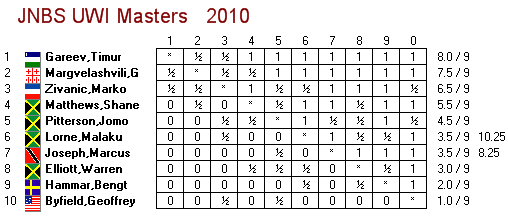
Uzbek grandmaster Timur Gareyev from the University of Texas in Brownsville completed his domination of the JNBS UWI Masters when he defeated Jamaican FIDE Master Jomo Pitterson at the Assembly Hall, University of the West Indies Mona, Jamaica. He collected a total of eight points from nine games, thus gaining the title of Caribbean Collegiate Champion.


David Mullings, Manager of eChannels and Discount Business of the Jamaica National Building Society, makes the first move on the game between GM Gareyev (right) and IM Margvelashvili (left), while Dr. Thelora Reynolds, the Director of Student Services (UWI, Mona) looks on
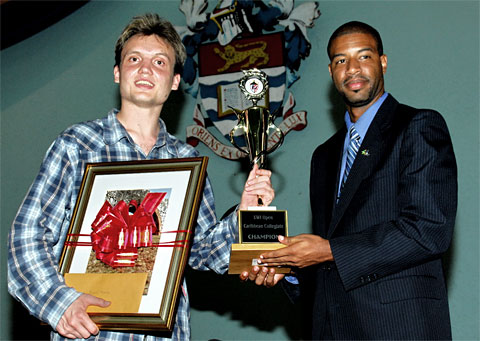

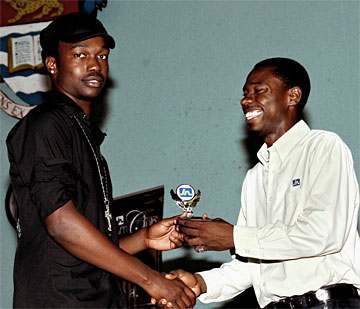
Gareyev (left) collects his prize for Caribbean Collegiate Champion from David Mullings, Manager of eChannels and Discount Business of the Jamaica National Building Society


GM elect Giorgi Margvelashvili from the University of Maryland in Baltimore County, and IM Marko Zivanic from the University of Texas in Dallas followed in second and third place respectively, with 7.5 and 6.5 points. National Master Shane Matthews of Jamaica, placed an impressive fourth, after securing a well-fought draw with IM Margvelashvili. 
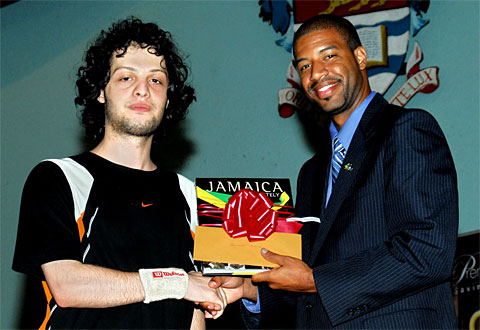

IM Margvelashvili (left) collects his prize for second place

IM Zivanic (left) collects his prize for third place
Marcus Joseph, the National Champion of Trinidad and Tobago and a student of the UWI St. Augustine campus, made an exciting comeback when he defeated both Jamaica’s top players, FM Warren Elliott and Swedish FM Bengt Hammar.
Daren Wisdom captured the UWI Open Championship, after placing ahead of National Master Mark Holness on tiebreak, after both had finished on five points. UWI’s National Master Damion Davy, captured third place in the UWI Open Championship with 4.5 points, after splitting the point in a very close encounter with long-time rival National Master Russell Porter.
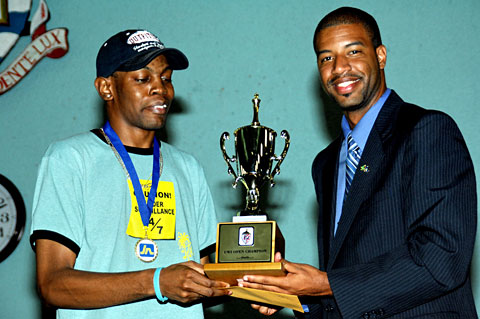

Daren Wisdom (left) is the UWI Open Champion 2010

In other sections, over two hundred participants sparred for the sectional titles. Lawrence Foreman and Justin Lowe won the Under 12 section, while Shreyas Smith captured the Under 16 section, all on perfect scores. Rachel Miller, Elias Issa and Aldeam Facey were victorious in the Beginners section.


NM Damion Davy (left) is the top University player in the Open Sections
Chancellor Hall (UWI), led by National Master Damion Davy, dominated the Inter-hall Chess Competition, when they flanked Rex Nettleford Hall 3-0 in the finals; this after turning back top seeds Preston Hall.
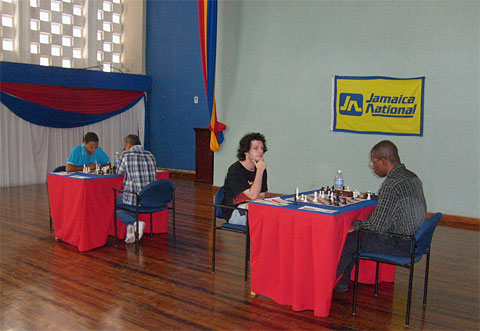


Marcus Joseph, the National Champion of Trinidad and Tobago (far left) tackles National Master Shane Matthews of Jamaica, while National Master Geoffrey Byfield (far right) puts up a fight against International Master Margvelasvhili
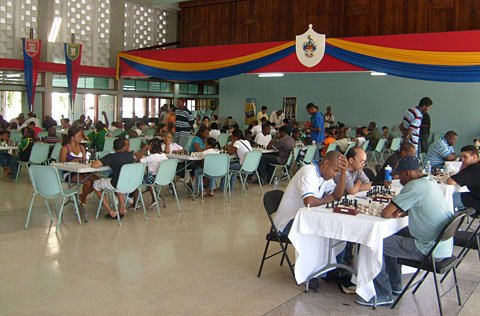


The Open Sections, in which over 200 participants in age groups and skill levels

The tournament was organized by the UWI Chess Society, of the University of the West Indies Mona, Jamaica; and was designed to promote chess both at the university and national level. President of the UWI Chess Society, Zachary Ramsay said he was “proud of the involvement of the young chess players” and sees the second staging of this tournament as being in keeping with the mandate of the Society as they seek to incorporate chess into the culture of the University and improve the intellectual drive and capacity of its students while striving to challenge a new generation of Caribbean chess players.
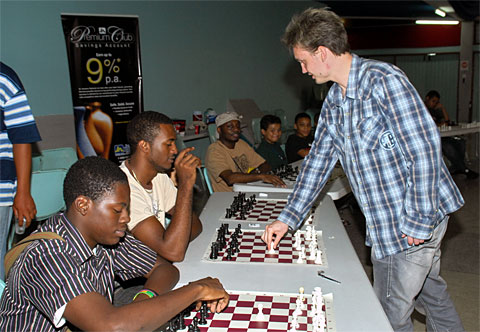

GM Timur Gareyev gives a simultaneous exhibition

Part of the proceeds from the event will be donated to the improvement of the National Children's Home, the Society’s outreach project. The event was sponsored by the Office of the Principal, UWI, Mona, The Jamaica National Building Society (JNBS), American Airlines, The Gleaner, National Commercial Bank, Pages Café and Supreme Ventures.
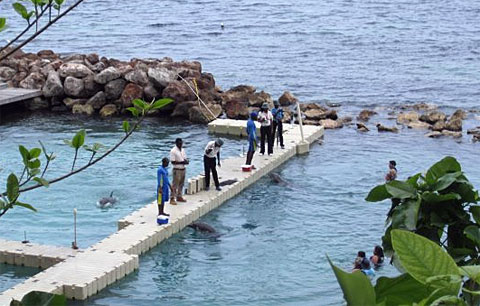

Dolphin Cove, Ocho Rios, another popular tourist attraction that the participants
visited; guests have the opportunity to swim with and touch dolphins
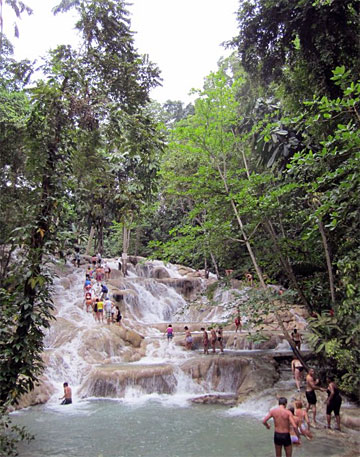
The popular tourist attraction, Dunns River Falls in Ocho Rios...

...which the participants visited on the rest day

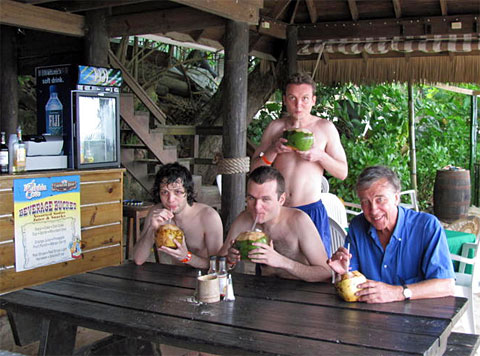
International participants enjoying a drink of coconut water
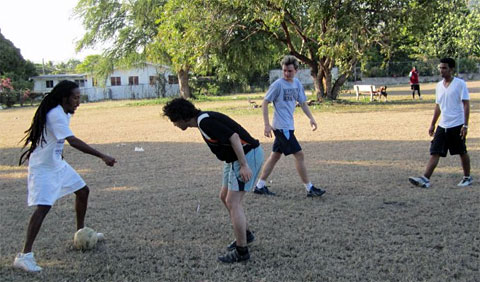
NM Malaku Lorne displaying his fancy footwork in a recreational football game

Video impressions of the event


About the University of the West Indies Mona

The University of the West Indies at Mona, Jamaica was established in 1948 as a college of the University of London. It gained full University status in 1962. The Mona Campus, located in Northern Kingston, encompasses 653 acres of land formerly part of two large sugar estates, Papine and Mona. Scattered throughout the campus are the famous historic ruins of a Roman-style aqueduct, water wheel, and other remnants of the sugar works which once stood on the site.

Arial view of Mona Campus – explore in the above frame or in a larger map
The campus is nestled in a lush valley embraced by Long Mountain to the south and the southernmost peaks of the famous Blue Mountain Range to the North. Mona is perhaps one of the most scenic areas in Greater Kingston, with the surrounding mountains providing a verdant backdrop which enhances the serene atmosphere of the campus.
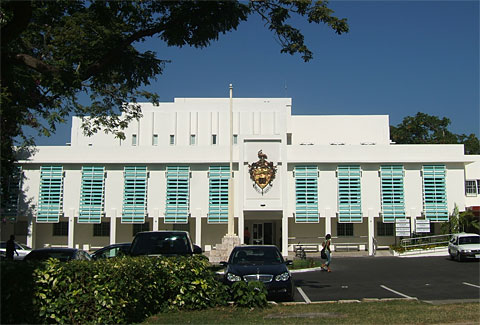
The Annex building at the University of the West Indies Mona
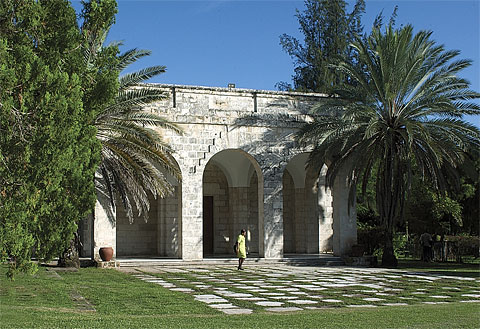

The Chapel at the University, which displays beautiful historic architecture

Attack The King - A Complete Chess Portal
If you liked the article kindly Digg it, Stumble it, Add to Technorati, bookmark it and please consider Subscribing by Email  and have articles delivered right to your inbox! OR Subscribe to Attack the King Feed in a Fead Reader of your choice OR Subscribe to SMS Alerts & Get Article Headlines & Updates delivered to your Mobile Phone for free.

Chess Classic Mainz 2010 - Back to the Roots

The world economic crisis is being felt in chess. In Bulgaria the the annual MTel tournament has been cancelled this year, and the very popular Mainz Chess Classic has been reduced to a three-day simul and open. Still, two world champions are part of the former, and a very large elite field of GMs is expected to play in the latter, which carries a prize fund of €30,000.

Press release

Chess Classic Mainz 2010 – Back to the roots

"Making a virtue out of necessity" is the central theme of the 17th Chess Classic Mainz. From 06 – 08 August 2010 the major international rapid chess event in the world will be played in Mainz. The Chess Tigers would have loved to present a whole week of top level chess in all its beauty and diversity, as we did in previous editions, but in this difficult economic times many companies do not have the financial resources anymore to to support sport events.
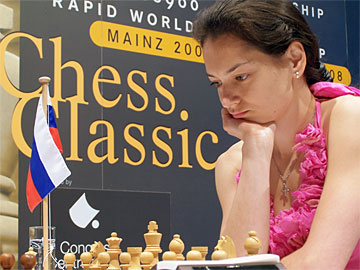
However, the Chess Tigers are still very grateful to announce the Chess Classic Mainz this year in a different format, that goes back to the roots of the first Chess Classic tournament of 1994, which was organized in Frankfurt. Just like the first-ever Chess Classic, we will be able to present two simultanious exhibitions and a rapid chess open tournament. In the simuls no less than two world champions will battle it out with amateurs: Chess World Champion Viswanathan Anand and his female counterpart Alexandra Kosteniuk, who does not only hold the title in classical chess, but also in Chess960.

Women's and Chess960 world champion Alexandra Kosteniuk
There is another small, but important difference to the 1994 edition: we upgraded the the rapid chess open to the Grenke Rapid World Championship. Nothing new is the top-level field with world-class grandmasters, the renowned presentation and the excellent playing conditions in the Rheingoldhalle in Mainz. It is an open tournament, and the winner will be crowned rapid chess world champion.

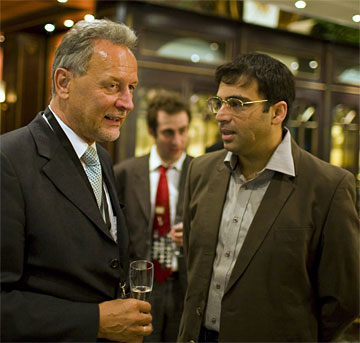
The main sponsor Wolfgang Grenke, CEO of Grenke Leasing,
with World Champion Viswanathan Anand
The Chess Tigers would like to thank their sponsors for the fantastic support in the past nine years. The tenth edition of the Chess Classic in Mainz is sponsored by GRENKE Group, FiNet AG, Livingston GmbH, Hilton Mainz, Congress Centre Mainz, Stadtwerke Mainz AG and our Prime Partners ChessBase, DGT and Schach Niggemann. These companies are able to provide sponsorship in different ways to make the Chess Classic once again a great event. The prize fund for the rapid chess world championship is no less than €30,000. Chess960, the exciting chess variant that has been pushed in Mainz and even made it in the offical FIDE rules, has to take a break for a year. We are confident, that we will be able to carry on with Chess960 next year.
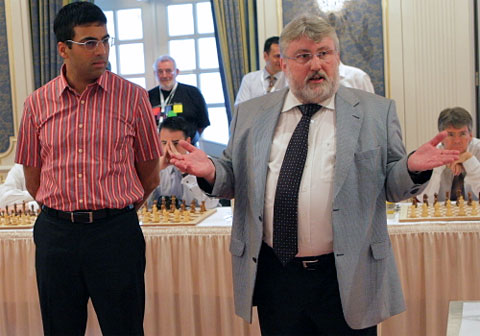
Anand and Chess Classic organizer Hans-Walter Schmitt at last year's simul

It is no secret that the 15. World Champion Viswanathan Anand is one of the closest friends of the Chess Tigers and it goes without saying that he will play a part in the 10th Chess Classic Mainz. On the first day of the event, on 06 August, Anand will play a standard simul on 40 boards. On the same day, Alexandra Kosteniuk will play a 20-board Chess960 simul. As you can see, Chess960 will still have a place in Mainz!

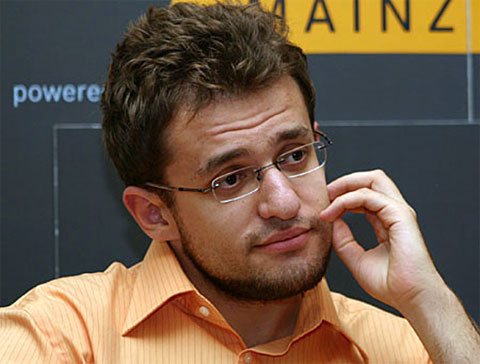
Armenian GM Levon Aronian, winner of the 2009 Ordix Open

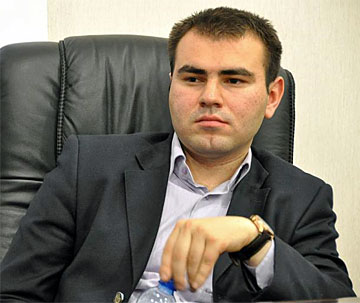
The Grenke Rapid World Championship will also be a treat for chess lovers: Levon Aronian, who is the current rapid chess world champion and the winner of the 2009 ORDIX Open, Shakhriyar Mamedyarov will play the open tournament to face a unique mixture of numerous world-class grandmasters and amateurs. You do not get the chance too often to play in a tournament with so many top players and with a little luck you may face a top ten player or even a world champion on the other side of the board!

World-class GM Shakhriyar Mamedyarov from Azerbaijan
The Open will be played in the same established format as in the previous editions. On 07/08 August 11 rounds will be played, in which the time control is 20 minutes + 5 seconds per move. The ambitious Chess Tigers organization team, who all work on a voluntary basis, will present the Chess Classic with all their experience and power on the highest level with the latest technology.
The Chess Tigers team, led by main organizer Hans-Walter Schmitt and patron Jens Beutel, Lord Mayor of the Mainz, invites you to the Rheingoldhalle in Mainz from 06-08 August 2010 for three days of chess extravaganza!
Mike Rosa/Eric van Reem

Article Source: Chessbase
Attack The King - A Complete Chess Portal
If you liked the article kindly Digg it, Stumble it, Add to Technorati, bookmark it and please consider Subscribing by Email  and have articles delivered right to your inbox! OR Subscribe to Attack the King Feed in a Fead Reader of your choice OR Subscribe to SMS Alerts & Get Article Headlines & Updates delivered to your Mobile Phone for free.
Vasily Smyslov Obituary

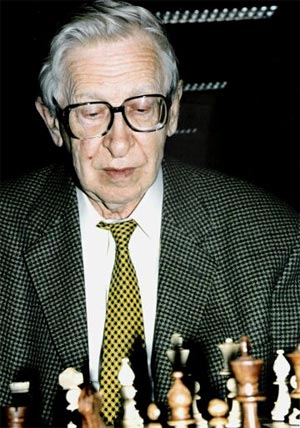
Vasily Smyslov
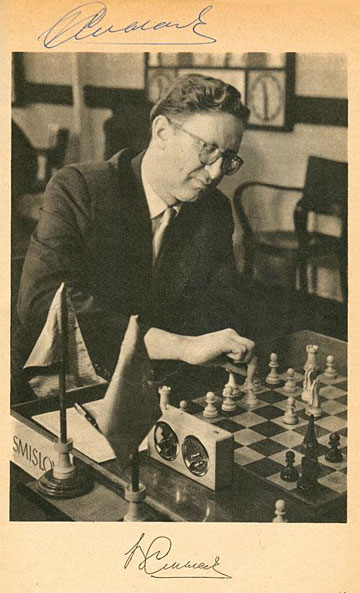
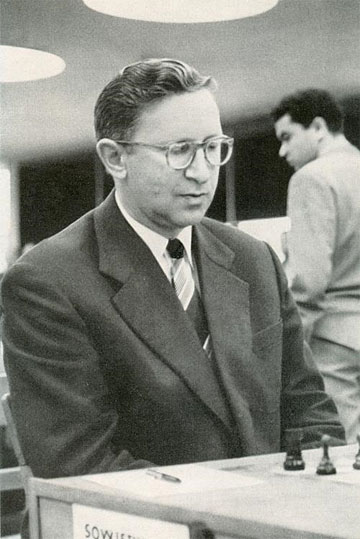
Vasily Smyslov, who has died aged 89, was world chess champion for a year in 1957-58 and among the game's best players for more than two decades. At his peak, Smyslov was renowned for his strategic and end- game play, and more recently he set new achievement records for a grandmaster in old age, reaching the world title semi-finals at 63 and maintaining his strength into his 70s. Yet chess was only his second career option, after he failed to become a singer with the Bolshoi Theatre.
Smyslov was born in Moscow. He learned chess at six from his father, a player of master strength who once won a game from the future world champion Alexander Alekhine. The 14-year-old Smyslov was inspired to take up the game in earnest after watching the Moscow international tournament in 1935. His progress was rapid. He won the Moscow title in 1938, placed third in the 1940 USSR championship, and, most significantly, came third again in the 1941 Soviet "absolute championship", behind only Mikhail Botvinnik and Paul Keres, who at that time were probably the two best players in the world.
Smyslov was excused military service due to poor eyesight, and used the war years to hone his game. He came second to Botvinnik in the 1944 USSR championship, yet still lacked international recognition. The US was the dominant chess power throughout the 1930s, with four successive gold medals between 1931 and 1937 in the biennial team Olympiads. So when the US and USSR met in a 10-board radio match in 1945, the Americans were favourites.
In the event, the Soviet team won 15.5-4.5, a score that included Smyslov's 2-0 victory over the four-time US champion Samuel Reshevsky. The mature style of the young Russian's wins made a big impression, especially the first game where the American was bemused by a prepared opening. After 23 moves the respective clock times read Reshevsky, one hour; Smyslov, three minutes.
Third place behind Botvinnik at Groningen 1946 confirmed Smyslov's position among the elite. That year Alekhine died, leaving a vacant title, and in 1948 a five-player match tournament decided his successor. Smyslov finished runner-up to Botvinnik. He was a decade younger than his rival, and the result established him as the new champion's heir apparent. By now he had perfected an intuitive, strategic style, which relied much more on a finely tuned sense of optimum squares for his pieces than on specific calculation of variations. His opening repertoire favoured long-term plans rather than theoretical debates, exemplified by his quiet 2 Nc3 against the fashionable Sicilian 1 e4 c5 and the several in-depth defensive systems he developed against the Ruy Lopez 1 e4 e5 2 Nf3 Nc6 3 Bb5. He liked the English 1 c4 as a route to simple, clear positions and to the endgames where he had no peers.
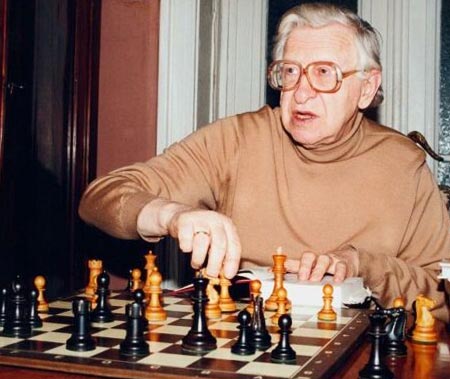
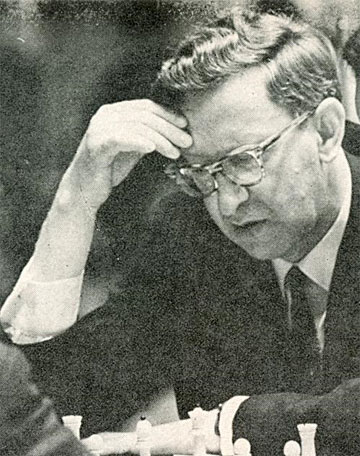
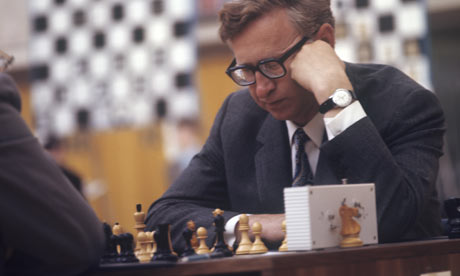
At the board Smyslov usually sat immobile, clenched hands to his cheeks. Tall and auburn-haired, he would pace the arena with a leisurely, almost stately mien. He had an individual technique, too, when moving a piece, grasping it midway down its stem rather than near the top as most players do, then placing it on its new square with a slight screwing action. The overall effect was of controlled, assured power.
In 1950 Smyslov, who had a fine baritone voice, was among several hundred singers who entered a national contest for a position at the Bolshoi, failing only at the final shortlist stage. Singing remained one of his great interests and he sometimes gave recitals during chess tournaments, often accompanied by Mark Taimanov, a fellow grandmaster.

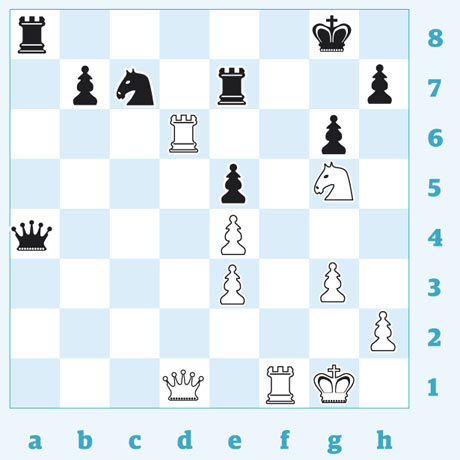
Smyslov v Botvinnik, USSR championship, Moscow 1955

Smyslov  
Smyslov beat his great rival in brilliant style by 1 Rd8+! Re8 If Rxd8 2 Qxa4 or Kg7 2 Qf3. 2 Qf3! Qc4 If Rxd8 3 Qf7+ and 4 Qxh7 mate, 3 Rd7! Resigns. If Rf8 4 Rxc7! Qxc7 5 Qxf8+! Rxf8 6 Rxf8+ Kxf8 7 Ne6+ and Nxc7 with an easy endgame win. His bid for the Bolshoi helps explain why he finished only third in the 1950 Budapest Candidates tournament, but he made up for it three years later when winning the Zurich 1953 Candidates, one of the strongest tournaments of all time. From 1953 to 1958 he was in his prime, and fully the equal of Botvinnik; yet the older man held the world title for a total 13 years, as against just one year for Smyslov. The answer lay in Botvinnik's superiority in match play, in preparation, and in using the small print of championship regulations to his advantage.
Botvinnik took an early lead in their 1954 series, exploiting weaknesses in his challenger's openings. Though Smyslov levelled, Botvinnik regained a narrow advantage and kept enough in hand to draw the match 12-12 and retain his title for another three years. Smyslov then won the 1956 Candidates in Amsterdam, and this time came better prepared for the championship. His strategic and endgame skills proved much superior and he won 12.5-9.5 with two games to spare. It was very different in the 1958 mandatory return match, which Smyslov began not fully recovered from a bout of influenza. Botvinnik unleashed the Caro-Kann 1 e4 c6 as an opening surprise, took a 3-0 lead and, though he tired near the finish, regained the title 12.5-10.5. They called Smyslov "the winter king" and his brief tenure seemed to diminish his motivation.
He was still favourite for the next Candidates in Yugoslavia in 1959, where his chief rival was the dazzling new talent Mikhail Tal. Tal specialised in the calculation of complex tactics, the complete antithesis to Smyslov's mastery of positional nuances. Before they met in the first round, Smyslov declared he would punish Tal's unsound style, but it was the younger man who triumphed. Soviet officials, who preferred a Russian to the Latvian Tal as candidate, were then scandalised when the normally staid Smyslov whose wife, Nadezhda Andreevna, had stayed at home in Moscow, started a public relationship with a Yugoslav woman grandmaster that affected his play.
His failure in Yugoslavia seemed to mark the end of Smyslov's career as a serious world-championship contender, but he continued to enjoy high-level success and the creative satisfaction of his artistic games. He won eight successive tournaments in the mid-1960s, with victories ranging from Havana to Hastings and Monte Carlo to Moscow.
Then, to everyone's surprise, he qualified as a candidate again at the age of 62 in 1983, and was paired in his quarter-final with the West German No 1 Robert Hübner. After extra time and a 7-7 scoreline, the organisers decreed that the match should be settled by the roulette wheel in the Austrian casino hosting the match. Smyslov flew back to Moscow without waiting for the denouement, but the wheel stopped at his colour, red, and he advanced. He beat Hungary's Zoltan Ribli in fine style in the semi-final before losing, despite a tough resistance, to the rising star Garry Kasparov in the final.
Smyslov continued to perform at a high level well into his 70s. Nobody of his age had ever maintained grandmaster strength, though later another durable ex-Soviet, Viktor Korchnoi, achieved similar results. In 1991 Smyslov won the inaugural World Senior (over 60) championship, and he had several impressive scores in the annual Veterans v Ladies match. By now his eyesight was deteriorating badly, so that he was virtually calculating without sight of the board.
He could still fight his corner, as when David Bronstein, who had tied for second at Zurich 1953, claimed that Soviet officials had pressured himself and other Russians to arrange results to ensure that Smyslov finished ahead of the American Reshevsky. Smyslov denied any knowledge of pre-game arrangements at Zurich, and countered that Bronstein's own success in the 1950 candidates was deliberately staged when he was a point behind the leader with two rounds left and allowed to catch up.
The title of Smyslov's 1979 autobiography V Poiskakh Harmonii (In Search of Harmony) referred both to his abortive musical career and to his belief that smooth interplay of the pieces was the key to practical success. Grandmasters respected his achievements as an icon of the golden age of Soviet chess and he was often invited as an honorary guest to tournaments.
Smyslov and his wife of more than half a century spent their final few years in near-poverty as his heart ailment deteriorated. Nadezhda survives him.
• Vasily Vasiliyevich Smyslov, chess grandmaster, born 24 March 1921; died 26 March 2010.

Article Source : Guardian

Attack The King - A Complete Chess Portal
If you liked the article kindly Digg it, Stumble it, Add to Technorati, bookmark it and please consider Subscribing by Email  and have articles delivered right to your inbox! OR Subscribe to Attack the King Feed in a Fead Reader of your choice OR Subscribe to SMS Alerts & Get Article Headlines & Updates delivered to your Mobile Phone for free.
Monday, March 29, 2010

Rook Endgames - Lesson 10 - Rook versus Split Pawns

Already previous lessons of this series will have provided you with some of the basics regarding situations of a lone rook against pawns. Generally a rook does well to try and stop an enemy passed pawn from behind, but if the enemy king is in the vicinity, the rook can only realistically expect to win if its own king has an input. Now we will examine the different situations that arises in Rook versus Split Pawns Endgame.

Rook versus Split Pawns

TIP: The rook should be kept flexible and active at all times. 
Here is another case of how the rook can work wonders by flitting around.
 

Lets take the previous example into another level. See below.

Rook_Endgame/rook vs split pawns 3.pgn

NOTE: The closer together the split pawns are, the easier it is for the king to control them.
Frankly, the above note is obvious whereas the positions are quite obscure. Nevertheless, the clear difference between the two is that in the latter the pawns are one file nearer to each other. The quicker accessibility for the black king to either pawn completely changes the assessment.
That's it for now. In the next lesson we will examine Rook vs Two Connected Pawns situation. So Stay Tuned !.

Attack The King - A Complete Chess Portal
If you liked the article kindly Digg it, Stumble it, Add to Technorati, bookmark it and please consider Subscribing by Email  and have articles delivered right to your inbox! OR Subscribe to Attack the King Feed in a Fead Reader of your choice OR Subscribe to SMS Alerts & Get Article Headlines & Updates delivered to your Mobile Phone for free.
Sunday, March 28, 2010

Rook Endgames - Lesson 9 - The Skewer Trick

The Skewer Trick

TIP: Always watch out for checks.

This doesn't mean always play a check if you see one, but rather that less can go wrong and more right if you are always on the ball regarding checks that you can make in a given position or your opponent can make after your intended move. See below.


Lets continue from where we left the above example.
NOTE: Life isn't always fair!

Okay, I'm sure you didn't need me to tell you that and probably more relevant is my advice that White could have avoided this trap with 1. Kg2!. See below.


Interesting, isn't it. We will see you next time with another one. In subsequent lessons we will discuss Rook vs. Pawn Endgames in detail. Stay tuned!

Attack The King - A Complete Chess Portal
If you liked the article kindly Digg it, Stumble it, Add to Technorati, bookmark it and please consider Subscribing by Email  and have articles delivered right to your inbox! OR Subscribe to Attack the King Feed in a Fead Reader of your choice OR Subscribe to SMS Alerts & Get Article Headlines & Updates delivered to your Mobile Phone for free.
Rook Endgames - Lesson 8 - Cutting off the King

In this lesson you will find an important situation that will recur time in again in numerous endgame. Not wasting any word lets jump into it.

Cutting off the King


It should be said that this sort of race is not untypical in rook endings. Kings do end up on opposite sides of the board. One reason for this is that a king may need to travel a distance to eliminate enemy pawns in order to create a 'passer' of its own.
Another possibility is that a king makes a decision to journey up the board in order to help promote a passed pawn. That is often necessary with an enemy rook behind the pawn, and a typical outcome is that the king forces the enemy rook to sacrifice itself for the pawn. This gain in material, however, leaves the king offside, and then the long trip back starts. The big question is whether the king gets back in time to halt the opponent's pawn without having to give up its own rook for it. Clearly in this example it proved a bridge too far.
However, sometimes opportunities are missed and on move one the useful 'cut off' technique could have been employed in the form of 1 Rg5!!. See below.

 
That it ...Another one next time. Stay Tuned!

Attack The King - A Complete Chess Portal
If you liked the article kindly Digg it, Stumble it, Add to Technorati, bookmark it and please consider Subscribing by Email  and have articles delivered right to your inbox! OR Subscribe to Attack the King Feed in a Fead Reader of your choice OR Subscribe to SMS Alerts & Get Article Headlines & Updates delivered to your Mobile Phone for free.
Rook Endgames - Lesson 7 - Pushing Passed Pawns

Hello & welcome everyone to series of lessons on Rook Endgames. So far we have covered some basic endgame strategies in previous articles. Interested readers who have just joined us can scroll down to the bottom of this post to explore previous articles on this series under the 'Related Posts' section. Well today we are going to learn another basic endgame strategy concerning passed pawns. So sit tight & enjoy!

Pushing Passed Pawns
So far we have seen passed pawns both succeeding and failing to make a nuisance of themselves. In order to compare passed pawns, take a look at the following extreme case.


NOTE: A famous adage runs 'Passed pawns are meant to be pushed'.
Clearly the closer pawns are to promotion, the more dangerous and similarly the more valuable they become. As it would no doubt force your opponent to take note, it does follow that you should get on with pushing passed pawns. However...
WARNING: Each plan should be taken on its own merits. Forgoing a sensible king centralization, for example, in favour of pushing a doomed passed pawn would not be bright.

That's it for now...Stay tuned coz there is much more to come.

Attack The King - A Complete Chess Portal
If you liked the article kindly Digg it, Stumble it, Add to Technorati, bookmark it and please consider Subscribing by Email  and have articles delivered right to your inbox! OR Subscribe to Attack the King Feed in a Fead Reader of your choice OR Subscribe to SMS Alerts & Get Article Headlines & Updates delivered to your Mobile Phone for free.
7th World Champion Vasily Smyslov dies at 89

He was "one of the great chess geniuses of the twentieth century" (Boris Spassky). Vasily Vasiliyevich Smyslov was born on March 24, 1921, auditioned as a baritone singer at the Bolshoi Theatre before he took up chess as a full-time career. In 1957 he beat Botvinnik in the world championship match and held the title for a year. Smyslov died in the night to Saturday March 27, 2010. In memoriam.

Vasily Smyslov, 1921 – 2010


We regret to announce the passing of Vasily Smyslov, who died on 27th March 2010 in Moscow, just three days after his 89th birthday. This information was passed to us by Boris Spassky, who had just returned from Moscow. "Vasily was one of the great chess geniuses of the twentieth century," Spassky said. "For me there were four titans of chess in the Soviet Union after the Second World War: Botvinnik, Smyslov, Keres and Bronstein"

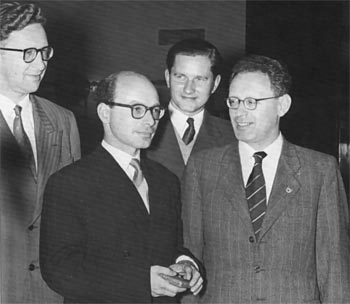
Smyslov, Bronstein, Keres and Botvinnik in 1954
Vasily Vasiliyevich Smyslov was born on March 24, 1921. He learnt chess at the age of six, and after studying books in his father's library, became really serious about the game at the age of 13, when two world champions, Capablanca and Lasker, visited his native city of Moscow. At the age of 16 he won the All-Union boys' championship, and at 17 he shared first in the Moscow City Championship. At 19 he came third in the unrestricted USSR Championship. There followed a string of successes that caught the eye of world champion Alexander Alekhine, and he became internationally known when he beat Samuel Reshevsky twice in the famous USSR vs USA radio match in 1945.
In the world championship tournament staged in 1948 to determine Aljechin's successor Smyslov came second after Botvinnik, who got the title, and ahead of Keres, Reshevsky and Euwe. In the Zurich Candidates Tournament of 1953 Smyslov scored +9 =10 –1, two points more than the nearest rival. He drew the world championship match against Botvinnik in 1954, and Botvinnik retained the title. Smyslov won the next Candidates, 1956 in Amsterdam, again with a clear margin, and in 1957 he beat Botvinnik in the world championship match by +6 =13 –3, but lost it a year later to the same player +5 =11 –7.

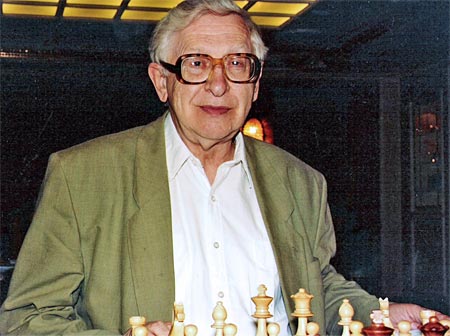
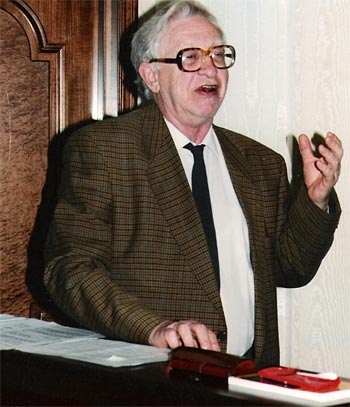
The former world champion, in Monaco 1994
After his one-year reign as world champion Smyslov played in the 1959, 1964 and 1982 Candidates tournaments. But he never again became a challenger. One should note that at his final Candidates event in 1982 was 61, the oldest player ever to participate in such an event. Incidentally he drew his quarter-final match against Robert Hübner 7:7 and won the tiebreak, which was a spin of the roulette wheel in the Casino where they were playing. He went through to the final, the match that determined who would challenge Anatoly Karpov, but lost 8.5:4.5 to Garry Kasparov.

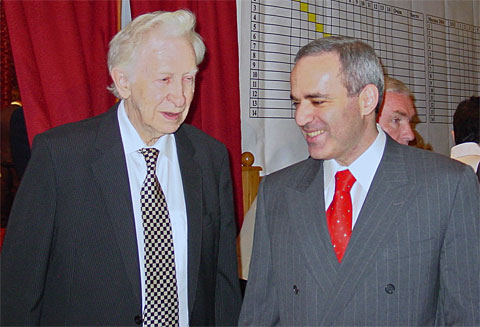
Vasily Smyslov with his former rival Garry Kasparov in 2004
Smyslov was always known for his positional style and his extraordinary endgame abilities. He was also a great combinational player, and in his games we find many spectacular tactical shots. In the opening he made important contributions to the English, Grünfeld, Ruy Lopez and Sicilian.

The Smyslovs

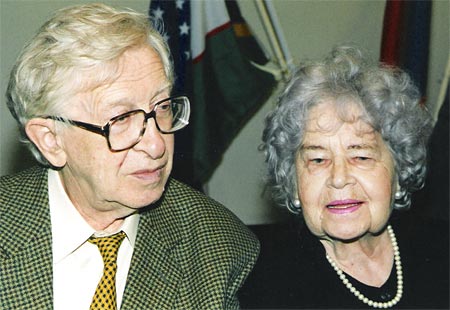
Smyslov with his wife at the 2004 Russian Superfinals
In his early years Smyslov studied at the Moscow Institute of Aviation. He also became an accomplished baritone singer. In fact he only decided to take up chess full-time when he failed an audition for the Bolshoi Theatre in 1950. He gave many recitals during his chess career, often accompanied by fellow world championship candidate and pianist Mark Taimanov.

The baritone singer Vasily Smyslov. At the age of 75 he produced his first CD of Russian romances. And in Mai 2001, exactly 50 years after his audition in the Bolschoi Theater, he sang there – in celebration of Anatoli Karpov's 50th birthday.
Smyslov played no competitive games after 2001, his failing eyesight being one of the prime reasons. He ended his chess career at the age of 80 and with an Elo rating of 2500.

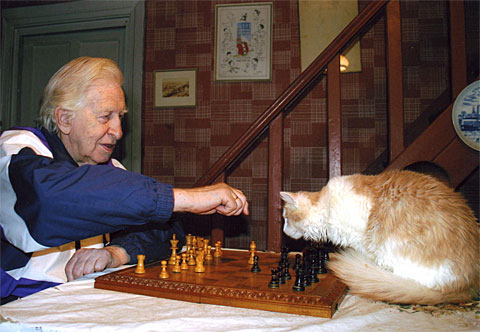
A friendly game with his cat Belka at his dacha
Photos by Dagobert Kohlmeyer

World Champions 1886–to present

 1: Wilhelm Steinitz, 1886–1894, Austria/USA
 2: Emanuel Lasker, 1894–1921, Germany
 3: José Raúl Capablanca, 1921–1927, Cuba
 4: Alexander Alekhine, 1927–1935, Russia/France
 5: Max Euwe, 1935-1937, Netherlands
 4: Alexander Alekhine, 1937–1946, France
 6: Mikhail Botvinnik, 1948–1957, Soviet Union (Russia)
 7: Vasily Smyslov, 1957–1958, Soviet Union (Russia)
 6: Mikhail Botvinnik, 1958–1960, Soviet Union (Russia)
 8 : Mikhail Tal, 1960–1961, Soviet Union (Latvia)
 6: Mikhail Botvinnik, 1961–1963, Soviet Union (Russia)
 9 : Tigran Petrosian, 1963–1969, Soviet Union (Armenia)

10: Boris Spassky, 1969–1972, Soviet Union (Russia)
11: Robert J Fischer, 1972–1975, United States
12: Anatoly Karpov, 1975–1985, Soviet Union (Russia)
13: Garry Kasparov, 1985–2000, Soviet Union (Russia)
14: Vladimir Kramnik, 2000–2008, Russia (PCA/Braingames)
15: Viswanathan Anand, 2007 – present.
FIDE
Anatoly Karpov, 1993–1999, Russia
Alexander Khalifman, 1999–2000, Russia
Viswanathan Anand, 2000–2002, India
Ruslan Ponomariov, 2002–2004, Ukraine
Rustam Kasimdzhanov, 2004–2005, Uzbekistan
Veselin Topalov, 2005–2006, Bulgaria

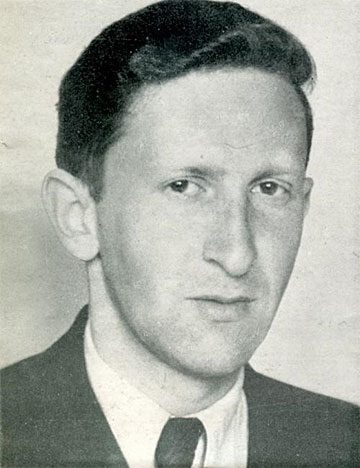
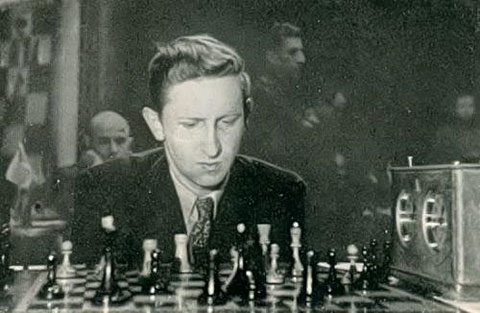
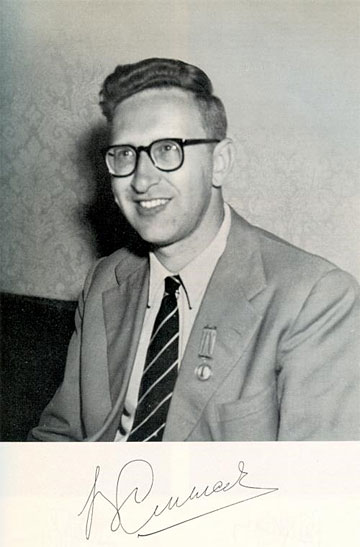
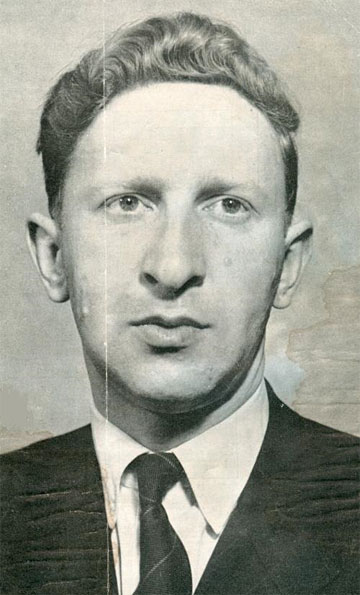
Stations of a World Chess Champion

A selection from the photographs provided by Edward Winter in Chess Notes


Source: Chess in Russia by P. Romanovsky, London, 1946

Source: Die Schacholympiade in Helsinki 1952 by H. Müller, Vienna, 1953

Source: Schach-Elite im Kampf, Zurich, 1954


Source: Chess Review, front cover, April 1958


Source: Kandidatenturnier für Schachweltmeisterschaft by S. Gligoric and V. Ragozin, Belgrade, 1960

Source: XIV. Schach-Olympiade Leipzig, 1960

Source: Chess Review, November 1967


Source: Programme, Russia v Rest of the World tournament, 2002
Article Source: Chessbase


Attack The King - A Complete Chess Portal
If you liked the article kindly Digg it, Stumble it, Add to Technorati, bookmark it and please consider Subscribing by Email  and have articles delivered right to your inbox! OR Subscribe to Attack the King Feed in a Fead Reader of your choice OR Subscribe to SMS Alerts & Get Article Headlines & Updates delivered to your Mobile Phone for free.
Friday, March 26, 2010

Rook Endgames -Lesson 6 - Shouldering off the Enemy King

Shouldering off the Enemy King
This is a very important concept in any endgame and essentially refers to the simple idea of maximizing your own king whilst if possible simultaneously reducing the scope of the enemy king. Take the following very simple case.


I hope that it is clear to you now. These are very basic endgame strategies.Slowly & steadily we will move to advanced lessons. In the next lesson we will concentrate on passed pawns.
That's it for now.See you next time.Stay tuned!

Attack The King - A Complete Chess Portal
If you liked the article kindly Digg it, Stumble it, Add to Technorati, bookmark it and please consider Subscribing by Email  and have articles delivered right to your inbox! OR Subscribe to Attack the King Feed in a Fead Reader of your choice OR Subscribe to SMS Alerts & Get Article Headlines & Updates delivered to your Mobile Phone for free.
Don't forget to subscribe to the thread for tracking replies